
Every business wants more customers — but most struggle to find them consistently. That’s exactly where lead generation in digital marketing changes the game. Understanding what lead generation means in digital marketing is no longer optional; it’s the foundation of every sustainable growth strategy in 2026.
In this guide, you’ll learn the definition of lead generation, why it matters, which digital marketing strategies actually work, and how to build a lead generation system that drives real results. Whether you’re a startup founder, a marketer at a growing company, or running a digital marketing agency, this guide is built for you.
By the end, you’ll know not just what a lead is in marketing — but precisely how to generate, nurture, and convert them into paying customers.
What Is Lead Generation in Digital Marketing? (The Clear Definition)
Let’s start with the basics. A lead in marketing is any person who has shown interest in your product or service. They’ve raised their hand — maybe by filling out a contact form, downloading a free guide, or clicking on an ad.
Lead generation, then, is the process of attracting those people and capturing their information so your sales or marketing team can follow up.
In the context of digital marketing and lead generation, this entire process happens online — through your website, social media, search engines, email campaigns, and paid ads.
Key Takeaway: A lead is not a customer yet. Lead generation is the bridge between a stranger discovering your brand and becoming a buyer.
The definition of lead generation has evolved significantly. It’s no longer just about collecting email addresses. It’s about attracting the right people, giving them real value, and building trust before you ever ask for a sale.
Why Is Lead Generation Important in Digital Marketing?
Here’s a simple truth: without leads, there are no sales. The importance of lead generation in digital marketing can’t be overstated — it’s what keeps your pipeline full and your revenue growing. Anyone asking what is online marketing will quickly realize that generating leads consistently is its most important function.
Here’s why marketers and business owners prioritize it:
- Predictable growth: A steady stream of digital leads means consistent revenue forecasting.
- Better targeting: Digital tools let you attract leads who actually need what you sell.
- Lower acquisition costs: Compared to traditional advertising, digital lead generation often costs far less per lead.
- Scalability: Once your system works, you can scale it up without a proportional increase in effort.
- Data and insights: Every campaign teaches you more about your audience, making future efforts even more effective.
The lead in marketing meaning goes beyond a name on a list. Each lead represents a real opportunity — and digital marketing gives you the tools to create thousands of those opportunities every month.
Key Takeaway: Businesses that invest in structured lead generation grow 133% more revenue than those that don’t, according to multiple industry studies.
How Does Lead Generation Work in Digital Marketing?
Understanding how to do lead generation in digital marketing starts with knowing the core funnel:
- Attract — Drive traffic to your website or landing page through SEO, paid ads, social media, or content marketing.
- Capture — Use a lead magnet (a free resource, demo, or discount) combined with a form to collect contact details.
- Nurture — Follow up with email sequences, retargeting ads, or helpful content to move leads closer to a decision.
- Convert — Turn a nurtured lead into a paying customer through a sales call, demo, or checkout page.
This is what lead generation through digital marketing looks like in practice. It’s a system, not a single tactic.
Want to see how Oscend helps businesses build this system end to end?
6 Best Digital Marketing Strategies to Generate Leads
There’s no one-size-fits-all approach. The right digital marketing strategies to generate leads depend on your audience, budget, and goals. That said, these are the channels that consistently deliver results:
1. Search Engine Optimization (SEO)
SEO is one of the most cost-effective ways to generate internet marketing leads over time. When someone searches “how to get leads for digital marketing,” and your blog post ranks at the top — that’s free, qualified traffic landing on your site every single day.
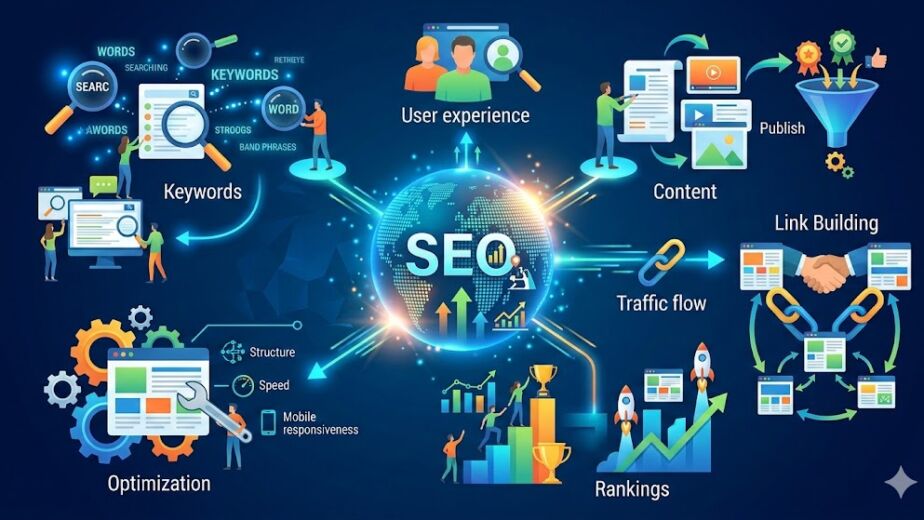
Optimizing your site for the right keywords, building high-quality backlinks, and creating genuinely helpful content are the pillars of a strong digital lead generation SEO strategy. If you’re not sure where to start, explore Oscend’s Search Engine Optimization services to see how a structured SEO approach can drive consistent organic leads.
2. Content Marketing
Content marketing leads are among the most valuable you can generate. When you publish guides, videos, case studies, or podcasts that solve real problems, you attract people who are already interested in what you offer.
Lead generation through content marketing works because it builds trust before a sales conversation ever happens. Your content does the educating — and your lead capture form does the collecting. Take a look at how Oscend’s Content Marketing Agency builds content strategies that attract and convert the right audience.
3. Pay-Per-Click (PPC) Advertising
PPC ads on Google or Meta let you put your offer directly in front of people actively searching for it. This is lead-based marketing at its most direct — you pay only when someone clicks, and a well-built landing page converts that click into a lead. Oscend’s Paid Search services are designed to maximize every click and minimize wasted ad spend.
4. Social Media Marketing
Platforms like LinkedIn, Instagram, and Facebook are powerful channels for lead online marketing. LinkedIn Lead Gen Forms, in particular, are highly effective for B2B companies and digital marketing agency lead generation.
5. Email Marketing
Email remains one of the highest-ROI channels in digital marketing leads strategy. Once you capture a lead’s email, a well-crafted sequence can nurture them from curious visitor to ready-to-buy customer — often on autopilot. See how Oscend’s Email Marketing services help businesses build automated nurture flows that convert.
6. Landing Pages and Lead Magnets
A dedicated landing page with a compelling lead magnet (free audit, template, webinar, or guide) is the workhorse of any lead generation marketing strategy. It gives visitors a reason to hand over their contact information.
Key Takeaway: The best lead marketing strategy combines multiple channels. SEO brings organic traffic. PPC brings speed. Content builds trust. Email converts. Use them together.
Lead Generation for Digital Marketing Agencies
If you run an agency, lead generation for digital marketing agencies is both your product and your biggest challenge. You’re selling lead gen services while simultaneously needing to generate leads for yourself.
The most effective lead generation for digital marketing agency growth comes from:
- Publishing case studies that show measurable client results
- Running targeted LinkedIn campaigns to your ideal client profile
- Offering free audits or consultations as lead magnets
- Building referral systems from existing clients
- Creating niche-specific content that attracts the exact businesses you want to work with
A clear lead generation digital media strategy — one that covers both inbound and outbound — is what separates agencies that struggle to grow from those that scale consistently.
Is Lead Generation Sales or Marketing?
This is a common debate. Is lead generation sales or marketing? The honest answer: it’s both, but it starts with marketing.
Marketing is responsible for generating leads — attracting and capturing potential customers. Sales is responsible for converting those leads into closed deals. The two functions need to be tightly aligned, sharing definitions of what qualifies as a “good lead” and how quickly leads should be followed up.
In many modern teams, this is called “smarketing” — the alignment of sales and marketing around shared lead generation and revenue goals.
How to Build a Lead Generation Strategy That Works?
A solid marketing strategy for lead generation doesn’t happen by accident. Here’s a framework:
- Define your ideal customer — Who are you trying to attract? The more specific, the better.
- Choose your channels — Where does your audience spend time online?
- Create a compelling offer — What will make someone share their contact info? A free guide, demo, or consultation?
- Build your landing page — Keep it focused. One offer, one action.
- Set up your nurture sequence — Email automation is your best friend here.
- Track and optimize — Use analytics to see what’s working and double down.
This is the core of any effective digital marketing lead generation strategy — and it applies whether you’re a solopreneur or a team of 50. For a deeper dive into structuring your pipeline, Oscend’s Funnel Strategy services can help you map the full customer journey from first click to closed deal.
Frequently Asked Questions
What is the definition of lead generation in digital marketing?
Lead generation in digital marketing is the process of attracting potential customers online and capturing their contact details — through forms, landing pages, or campaigns — so your sales team can follow up and convert them.
What is a lead in marketing, and how is it different from a prospect?
A lead has shown interest in your business. A prospect is a qualified lead who fits your ideal customer profile and is more likely to buy. All prospects start as leads, but not all leads become prospects.
How do you generate leads through digital marketing?
Attract the right audience via SEO, ads, or social media, offer something valuable (a guide, demo, or consultation), and capture their details through a landing page. Then use email nurturing to move them toward a decision.
What is the best digital marketing strategy for lead generation?
There’s no single best approach — the most effective lead generation marketing strategy combines channels. SEO drives organic traffic, PPC delivers speed, content builds trust, and email converts. The right mix depends on your audience and budget.
Why is lead generation important in digital marketing?
Without leads, there are no sales. Lead generation in digital marketing creates a predictable flow of interested prospects, making it easier to forecast revenue, scale growth, and reduce customer acquisition costs over time.
Conclusion
Understanding what lead generation in digital marketing really means is the first step — but building a system that actually delivers consistent results is where the real work begins. From SEO and content marketing to PPC and email, the right combination of channels can fill your pipeline with qualified digital leads every single month.
The key is to start with strategy, build with intention, and optimize with data. Lead generation isn’t a one-time campaign — it’s an ongoing engine that powers your entire business.
Ready to build a lead generation system that actually works?