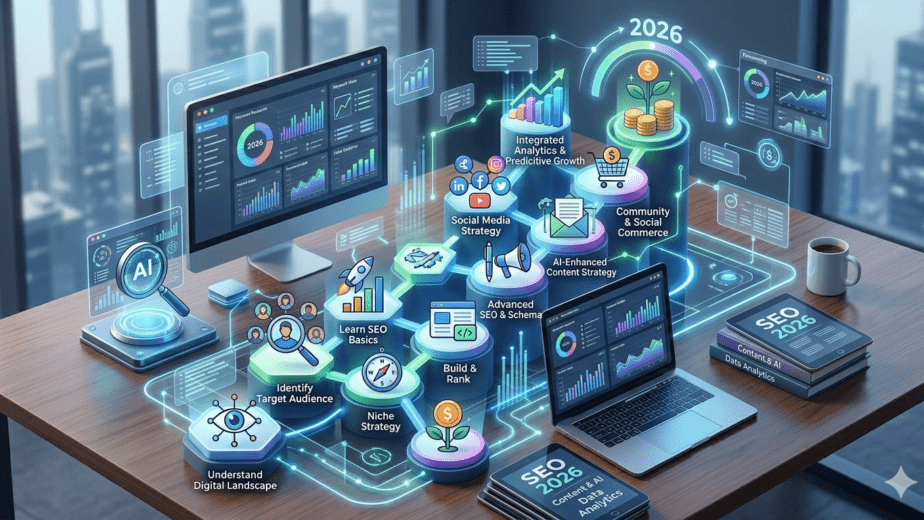
What is online marketing — and why does every successful e-commerce brand obsess over it? Simply put, marketing online is the full ecosystem of digital strategies, tools, and channels that drive people to your store and turn them into paying customers.
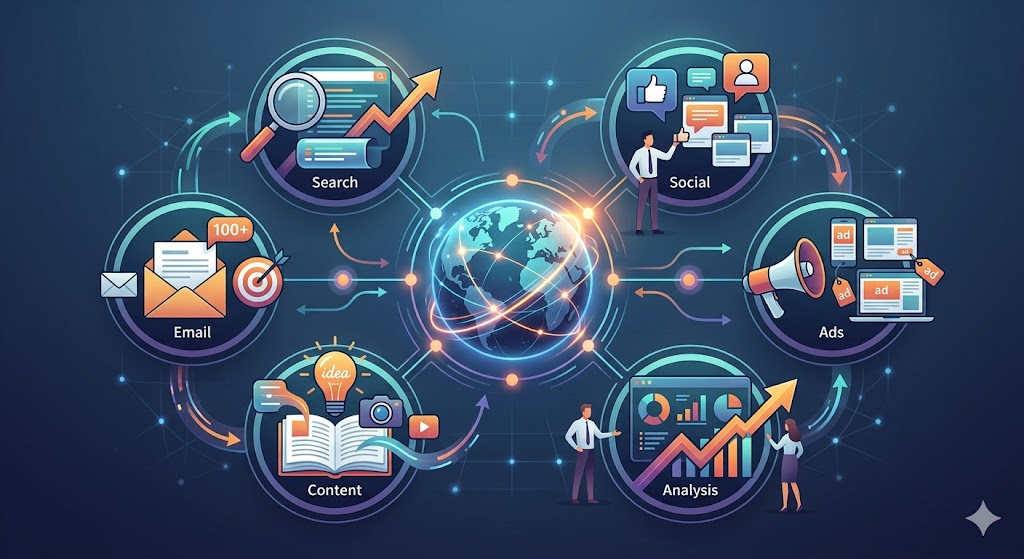
Understanding what is an online marketing means going beyond buzzwords. It means knowing how SEO, social media, email, content, and paid ads work together as a system. In this guide, you’ll get a clear, practical breakdown of each channel, how they connect, and how to put them to work for your business — whether you’re starting from zero or looking to scale what’s already running.
Whether you’re new to e-marketing or refining an existing approach, this post covers everything you need to know.
What Is Online Marketing, and Why Does It Matter for E-Commerce?
What is online marketing at its core? It’s the practice of promoting your products or services through digital channels — search engines, social media, email, paid ads, and more. Unlike traditional advertising, every action is trackable, every campaign is adjustable, and every dollar can be accounted for.
For anyone building an e-commerce business, this isn’t optional. It’s the engine. Without it, even the best product sits unseen in a digital warehouse.
Key takeaway: Online marketing is not a single tactic. It’s a coordinated strategy across multiple channels, each reinforcing the other.
The good news? You don’t need a massive budget to start. You need a smart plan.
Step 1: Build a Website That Works as a Marketing Tool
Before you run a single ad or post a single tweet, your website needs to be solid. A poorly built site will leak every visitor you send to it.
Your website is your storefront, your salesperson, and your brand ambassador — all in one. It must load fast, look trustworthy, and make purchasing feel effortless.
Key elements of a high-converting e-commerce website:
- Clear navigation so visitors find products instantly
- Mobile-first design since over 60% of online shoppers browse on phones
- Compelling product pages with quality images and honest descriptions
- Secure checkout with multiple payment options
- Trust signals — reviews, guarantees, and visible contact information
If your site isn’t converting, everything else you do in online internet marketing becomes expensive and frustrating. A well-designed site isn’t just pretty — it’s engineered to turn visitors into customers. And if you plan to sell across multiple platforms, exploring dedicated online marketplace services can help you reach buyers wherever they already shop.
Key takeaway: Your website is the foundation of your entire e-marketing strategy. Get it right before you spend a single dollar on traffic.
Step 2: Understand the Core Online Marketing Strategies
There’s no shortage of internet marketing strategies to choose from. The key is knowing which ones make sense for your stage of business.
Here are the primary channels every online business should understand:
1. Search Engine Optimization (SEO) SEO is the process of getting your website to rank in search results organically. It’s a long-term play, but it delivers compounding returns. A well-optimized product page can bring in free traffic for years. If you want to move faster, professional SEO services can help you build that foundation the right way from the start.
2. Social Media Marketing (SMM) Platforms like Instagram, TikTok, Facebook, and Pinterest are powerful for e-commerce. SMM builds brand awareness, drives traffic, and — when done right — creates community around your products. Oscend’s social media marketing services are built specifically to help brands turn followers into paying customers.
3. Pay-Per-Click Advertising (PPC) Online advertising via Google Ads or Meta Ads lets you put your products in front of people who are actively searching or have shown interest. It’s fast, measurable, and scalable. Structured performance marketing services take this further — optimizing every campaign so your ad spend works harder, not just louder.
4. Email Marketing Email remains one of the highest-ROI channels in digital marketing. Building a list from day one means you own a direct line to your audience — no algorithm changes can take that away. Dedicated email marketing services can help you set up automated flows that nurture leads and recover abandoned carts on autopilot.
5. Content Marketing Blog posts, videos, guides, and tutorials attract your ideal customer before they’re ready to buy. It builds trust and supports your SEO strategy simultaneously. Working with a specialist content marketing agency can help you produce content consistently — and make sure it actually ranks.
► Not sure which channels to prioritize first?
Step 3: Get Your SEO Foundation Right
For online business marketing, SEO is non-negotiable. It’s how people find you when they’re actively looking for what you sell.
Internet marketing strategies that lean on SEO tend to outperform paid-only approaches over time because organic traffic compounds. A page that ranks #1 for a high-intent keyword can deliver thousands of visitors every month — for free.
Here’s what your early SEO focus should look like:
- Keyword research: Understand what your target customers actually type into search engines
- On-page optimization: Include relevant keywords in your titles, product descriptions, and image alt text
- Technical SEO: Ensure your site loads fast, is mobile-friendly, and is easy for Google to crawl
- Link building: Earn mentions and backlinks from other reputable websites
- Local SEO (if applicable): Optimize for searches in your geographic area
Strong digital PR agency services can accelerate your link-building significantly — earning you high-authority mentions that boost your rankings faster than organic outreach alone.
Key takeaway: SEO is a long-term asset. Start building it from day one, even if results take 3–6 months to show.
Step 4: Use Social Media as a Growth Engine
Social media marketing is where e-commerce brands often see their fastest early wins. Platforms give you direct access to audiences at scale, and visual products perform especially well.
Strategic internet marketing on social media isn’t about posting every day and hoping for the best. It’s about understanding where your audience spends time and showing up there consistently with content that educates, entertains, or inspires.
For small businesses in particular, marketing online for small business doesn’t get more accessible than social media. You can start with a $0 budget and build a following organically.
As you grow, paid social advertising becomes a powerful accelerant. You can target users by age, location, interests, behavior, and even past purchase intent. Pair that with a strong email marketing strategy to re-engage visitors who don’t convert the first time — email consistently delivers some of the highest ROI of any digital channel.
► Already running social but not seeing results? See how Oscend’s social media marketing services can help you scale.
Step 5: Track, Test, and Optimize Everything
One of the greatest advantages of online marketing and advertising over traditional methods is measurability. Every click, impression, conversion, and abandoned cart tells you something.
Use tools like Google Analytics, Meta Pixel, and your e-commerce platform’s built-in dashboard to track:
- Where your traffic is coming from
- Which pages visitors leave without buying (and why)
- Which products get viewed but not purchased
- Which marketing channels deliver the best ROI
Online marketers who grow fastest aren’t necessarily the most creative — they’re the most disciplined about testing. Run A/B tests on your product pages, email subject lines, and ad copy. Let data drive your decisions.
Know what is an online marketing campaign — and how to run one
So, what is an online marketing campaign? It’s a coordinated, time-bound effort across one or more digital channels — designed to achieve a specific goal.
Key takeaway: Digital and online marketing is a feedback loop. The more you measure, the faster you improve.
Advantages of Online Advertising Over Traditional Marketing
Still on the fence about whether online advertising is worth the investment? Here’s a quick comparison:
| Traditional Advertising | Digital Marketing |
|---|---|
| Broad, untargeted reach | Precise audience targeting |
| Difficult to measure | Fully trackable and attributable |
| High upfront costs | Flexible budgets, start small |
| Static — can’t adjust mid-campaign | Real-time optimization possible |
| Slow feedback loops | Instant data and insights |
The advantages of online advertising and the benefits of digital marketing are clear: you get more control, more data, and a better return on your investment — especially when you’re building from the ground up with limited resources.
CONCLUSION
Now that you understand what is online marketing and how its core channels work together, the next step is putting that knowledge into action. From building a high-performing website to mastering SEO, social media, email, and paid advertising, every piece plays a role in your long-term growth.
The businesses that win online aren’t the ones with the biggest budgets. They’re the ones who build smart systems, invest in the right channels, and treat their marketing as a living strategy — not a one-time setup. Start building your online presence the right way today.
Frequently Asked Questions
What is online marketing and how does it work for e-commerce businesses?
What is online marketing in practice? It’s the use of digital channels — search engines, social media, email, and paid ads — to attract and convert customers. For e-commerce, it drives targeted traffic to your product pages and guides visitors through the buying journey using a mix of complementary strategies.
What are the best internet marketing strategies for a new online store?
Start with SEO for long-term organic traffic, one social platform where your audience is active, and email marketing for retention. Add PPC once you have a baseline budget. Focus on one or two channels well before expanding.
How is online marketing different from traditional marketing?
Online marketing is measurable, targeted, and adjustable in real time. Traditional marketing — TV, print, radio — offers broad reach but limited tracking. With digital marketing, you know exactly who saw your ad, who clicked, and who bought.
What is the difference between online marketing and digital marketing?
The terms are largely interchangeable. Digital marketing covers all promotion through digital devices; online marketing refers specifically to internet-based channels. In practice, both describe the same core strategies — SEO, social media, email, content, and paid advertising.
How much does online advertising cost for a small e-commerce business?
Google Ads and Meta Ads let you start with as little as $5–$10 per day. Most small e-commerce businesses budget $300–$500 per month for paid ads. Organic channels like SEO and social media can deliver solid results with little to no spend — they just take more time.